From wealth to agency: How women can fund a more just future
Michelle Yue on expanding women’s agency and using philanthropic capital to transform entrenched gender inequities.
- Blog
- All impact sectors
- All Regions
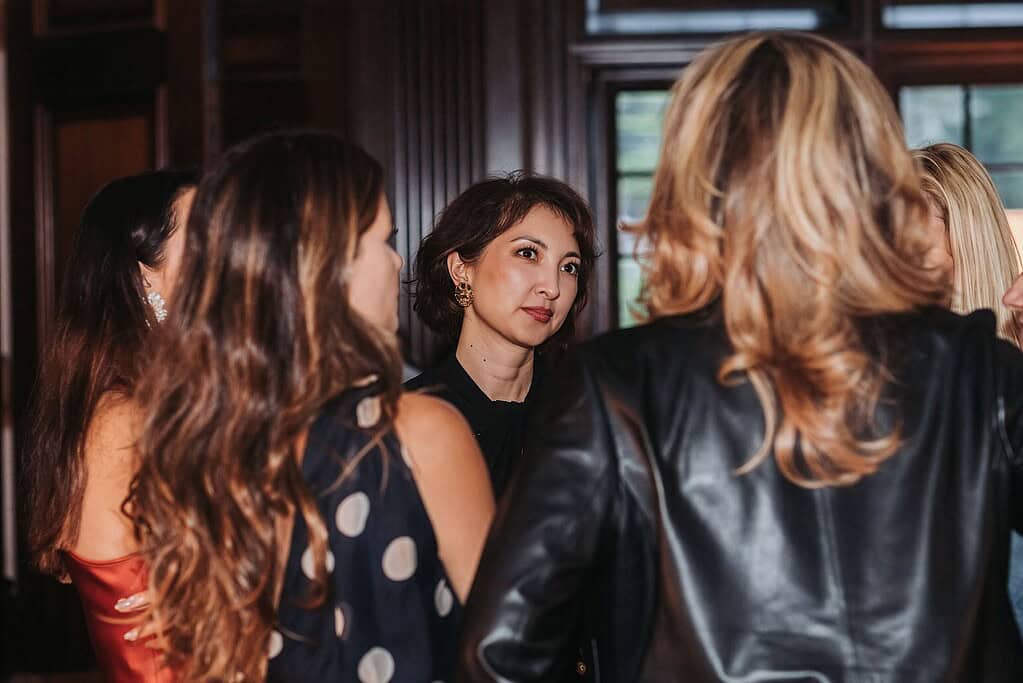
Acumen Partner Michelle Yue has built a career across many fields; as an entrepreneur, impact investor, educator, community builder, women’s advocate, and strategic philanthropist. No matter the room or role she’s in, she’s driven by a clear conviction: When women and girls have agency and ownership, they change the world.
As we mark International Women’s Day, we connected with Michelle about her personal journey that has led to and sustained her work — from co-founding the Beam Network, an education platform and global community for women of significant wealth, to serving as Chair of the Millby Foundation, where she partners with Acumen to empower a new generation of leaders across Southeast Asia to build a more just and inclusive future.
We also explored the importance of audacity and risk-taking, long-term thinking, and why the next generation of women philanthropists gives her extraordinary hope.
You are deeply committed to helping women and girls have the opportunity and agency to shape their own lives. How did that become a focus for you?
I grew up in a family where helping others wasn’t framed as philanthropy. It was simply part of who we were. With a mother who was a social worker and a father who was a doctor, service feels like it’s part of my DNA. I firmly believe that privilege comes with responsibility, and that principle has guided many of my choices.
That belief became deeply personal during my first visit to Thailand in my mid-20s. Seeing the depth of poverty – and how it constrained the ability of girls to shape their own futures – affected me profoundly. That experience crystallised my determination to use my resources, skills, and networks to help expand agency and opportunity for women and girls.
As someone with a platform, what conversations are you most eager to influence? And how do you think visibility and storytelling can change how we give?
Right now, I’m focused on influencing conversations about who gets to make decisions and on what terms. Supporting women and girls isn’t only about funding programs; it’s about ensuring they have real authority over resources, priorities, and solutions that shape their lives. Too often, well-intentioned philanthropy still centralizes power with funders rather than those with lived experience.
Visibility and storytelling matter because they challenge that imbalance. When women and girls are viewed not just as recipients of support but as decision-makers, leaders, and problem-solvers, it forces a different kind of accountability. It shifts how funders assess risk, success, and impact, and it invites more trust-based, long-term approaches rather than short-term or transactional ones.
At its best, storytelling doesn’t just inspire empathy; it reshapes how capital flows. It influences who is trusted, whose expertise is valued, and how resources are deployed. That shift – toward agency, ownership, and long-term thinking – is a thread that runs through all of my work, and it’s essential to creating sustainable, systemic change.
You founded the Beam Network to empower women wealthholders to shape the future of finance and change the world. Why did you feel that community was missing?
When I started looking for financial education and a genuine peer network for myself, I was struck by how little existed for women. Most resources were either aimed at those going into the finance industry, tied to a financial institution, or focused on basic budgeting. Women with responsibility for significant capital find little tailored support.
What I’ve learned is simple but powerful: Women learn differently when they’re in a trusted community. They ask the questions they’ve hesitated to voice, openly share their challenges, and support one another’s growth. And the shift that happens – in confidence, clarity, and agency – is truly extraordinary.
The Beam Network was created to be the go-to private financial education platform and peer community for women of significant wealth. It mirrors what I admire in Acumen: the belief that when people are equipped with the right tools, frameworks and peer support, they make more intentional, values-led decisions that can influence systems, not just individual outcomes.
What does being entrepreneurial in philanthropy mean to you? How do you balance risk-taking with the need for measurable, scalable impact?
Philanthropic capital, especially private philanthropic capital, should be the most risk-tolerant capital in the system. Because it is, by definition, “surplus to immediate needs,” it can back bold ideas, emerging leaders, and unproven solutions that hold enormous potential.
But risk-taking doesn’t mean being careless. Like any investment, it’s important to do your due diligence. Having a robust strategy and theory of change is key. Then combine that with rigorous, data-driven metrics to track progress, assess success, and ensure accountability. For me, the end goal is not just to treat symptoms but to tackle root causes and change the very systems that perpetuate large-scale problems.
I care deeply about transparency with grantee partners. Systems change is inherently bumpy. Assumptions break and context shifts. Our role as funders is to support learning with honest dialogue about what’s working and what isn’t. I’m conscious of the power dynamics at play, which is why I see myself as a partner, rather than simply a funder, and actively encourage open conversation. I want to hear both the successes and the setbacks because real progress depends on learning from both.
That’s what entrepreneurial philanthropy looks like to me: courage paired with curiosity, partnership, and learning.
What about Acumen’s model or mission resonates with you? And where do you think Acumen has the greatest potential to impact some of the world’s biggest challenges?
Acumen’s commitment to moral leadership stands out. The intentional way it develops leaders who can navigate complexity and make values-driven decisions is rare, and the leadership they foster is increasingly essential.
What also strikes a chord is Acumen’s understanding that no single form of capital can address the scale of challenges we face. As issues like climate migration, inequality, and entrenched poverty become more complex, lasting impact requires a blended capital approach, combining philanthropic capital, patient investment, and market-based tools. Acumen’s leadership in this space has immense potential to shape how the next chapter of impact is funded and led.
Looking ahead, what gives you hope about the next generation of philanthropists — especially women — and the kind of world they’re building together?
The next generation is extraordinary. They are values-aligned in a way my generation simply wasn’t — in where they work, what they buy, and how they give. I’ve been deeply inspired by the younger people I meet: their clarity, their creativity, and the breadth of issues they champion. They’re thoughtful, globally conscious, and unafraid to ask hard questions about power, justice, and systems. But what excites me most is when younger people, particularly women, step into their power with intention. It’s electrifying when they recognize and deploy their capital — philanthropic, investment, and social — to work in unison, becoming far more effective at advancing the futures they care about.
When you take a break from changing the world, we’d love to know what you’re enjoying reading or watching or a place that you’ve recently visited that has inspired you?
I’ve recently discovered Lisa See’s writing and just finished “Snow Flower and the Secret Fan.” Engaging, beautifully crafted, and quietly powerful, it tells the story of the lifelong friendship between two women while they navigate the harrowing expectations placed on women in 19th century China.
Travel-wise, visiting The Feuerle Collection in Berlin was a standout. Designed by English architect John Pawson and housed in a former telecommunications bunker, it’s not only a highly personal art collection but an immersive, almost monastic sensory experience. And I managed to tick something off my bucket list last year: seeing the autumn colours in Vermont. It was every bit as magical as I’d hoped.
More from our Knowledge Hub
Who pays for dignity? Rethinking India’s waste economy
Entrepreneurs can’t fix a broken system alone. Fair pay and safe work require investors, government, and brands to share the cost.