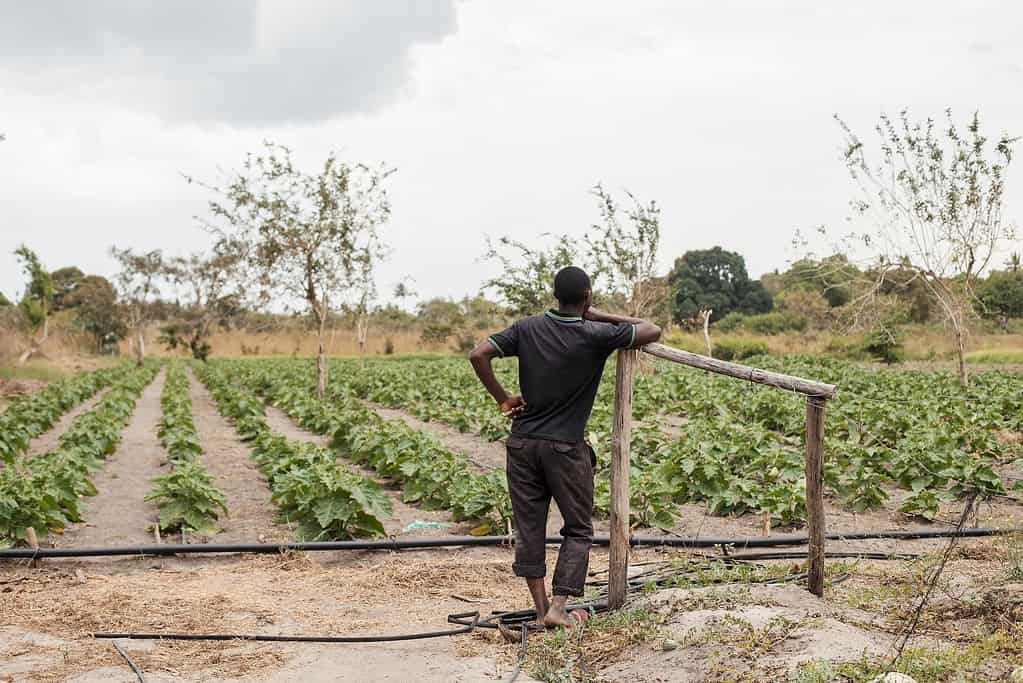
Scaling decent work in Africa starts by supporting informal jobs
The informal economy, long viewed as a problem, is vital for Africa’s youth. Just ask young workers in Nigeria.
- Blog
- Dignified jobs
- West Africa
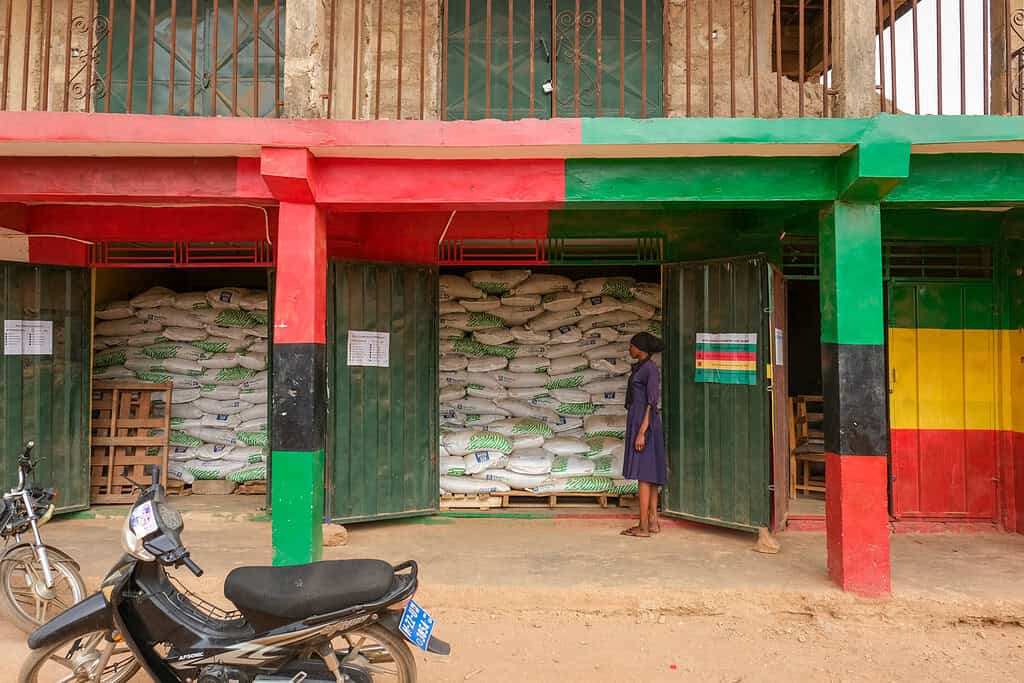
Each year over 10 million young people enter sub-Saharan Africa’s workforce, yet only about three million formal jobs are created. This leaves most youth to build their livelihoods in the informal economy. While this is usually cast as an unfortunate inevitability, many youth view it as a definitive choice. They, especially young women, are drawn to the autonomy, flexibility, and daily income that informal work provides. And while there are real challenges that come with the informal economy, young workers would like to see it supported and scaled rather than replaced or eliminated.
As part of the research process leading up to Acumen’s new report with BFA Global, Dignified Futures: Youth Aspirations and the Search for Decent Work in Nigeria, we conducted 90 in-depth interviews and focus group discussions with men and women ranging in age from 18 to 30 across Nigeria. Their message was clear: Although they need decent work opportunities to break out of poverty, they are not waiting. They are working, building, and striving to make a living, shaping economies that don’t always work for them.
“A lot of us have degrees, but it’s hard to find jobs in our field, so we drive to earn money in the meantime,” said a female driver in Lagos.
“I worked for a hailed mobility company for a year and two months,” said a male driver in Enugu. “I’ve been on my own for three years and eight months now. I enjoy the flexibility of this job.”
“I feel good and quite comfortable,” said an informal retail employee in Enugu. “Although I am aspiring to expand, for now, I am not dissatisfied. My goal is to import high-quality clothes and goods from places like Turkey, and cater to a more specific clientele.”
We spoke with workers in transportation, healthcare, creative, retail and trade, and agriculture. Across all five sectors, we found that they managed portfolios of work like gigs, small-scale trading, and community services that contribute to their income and their drive for purpose and stability. This layering of livelihoods is the reality for 93% of Nigerian workers.
“Many of these guys have side businesses,” a transportation employer in Lagos told us. “They’re doing gig work to make money to invest in their actual life’s purpose…a farm, shop, or salon that they really want to do.”
In addition to the Dignified Futures report, Acumen and BFA hosted a webinar in April about unlocking decent work for youths in Africa. All the experts on the panel emphasized that, rather than forcing all youth into formal jobs, we must recognize that formal and informal work will co-exist for decades to come and thus must design interventions that make informal work more viable, secure, and dignified.
“Where we are now as a continent and as a country is that the informal sector will still be the largest employer of labour for decades,” said Sanmi Lajuwomi, founder and CEO of Winock Solar.
“There will always be formal and informal work,” echoed Molade Adeniyi, CEO of Teach for Nigeria. “Let’s appreciate that and reshape our thinking.”
The Lack of Security in Informal Jobs
While informal work offers flexibility and income, it often lacks critical elements of security, such as income stability, social protection, and benefits, which are equally important. Without buffers against life’s shocks, many youth and especially young women remain one crisis away from sliding deeper into poverty.
One woman who works as an informal healthcare employee in Kano shared her reality with us in the Dignified Futures report:
“I often go two to three months without payment. When I do receive allowances, they are very low. My motivation for continuing the work is primarily to help society, no longer for financial gain.”
Importantly, the burden of informality is not gender-neutral. Many systems sideline young women who carry the weight of unpaid care work, cultural expectations, and workplace exclusion.
However, innovators are showing that security can be designed into informal work. For instance, the start-up Awabah in Lagos, with a mission to bring financial security to the informal economy, offers micro-pensions and insurance to independent workers and small entrepreneurs, providing long-term financial safety nets that are tailored to the risks and realities of their livelihoods.
Likewise, Turaco, a micro-insurance company, provides affordable health and life cover to low-income earners and informal workers. By embedding insurance into digital platforms and employer benefits, it protects users from common shocks like illness or income loss, helping them stay resilient while they work.
These companies are demonstrating that security is not only about formal contracts, but can be embedded in platforms, market linkages, and support systems within the informal economy itself, through technology, partnerships, and policy.
“The face of the informal sector is feminine and (that) is deliberate,” said impact expert Femi Balogun at the webinar. “The systems within which we’re working have continued to marginalize women.”
“Safety nets can be designed within informal work,” said Sanmi Lajuwomi, CEO of Winock Solar. “We don’t need to wait for the government. In our own spaces, what are we doing?”
“Intervention should not just be about how we get young people to survive, but how we get them to thrive,” added Femi Balogun.
Using Productivity to Scale Decent Work
Beyond security, productivity is the missing ingredient to scaling decent work. While many youths are working hard, they are often trapped in working poverty, unable to afford a living wage or build the lives they want. They need support to transition from survival-level work to sustainable businesses. That means unlocking ladders out of poverty. Some companies are lighting the way, particularly in embedded finance, e-commerce, and mobility.
Consider Moniepoint, which is helping small informal retailers access working capital, expand inventory, and grow daily earnings, using transactions to build credit history where there used to be none. Or Pricepally, which connects small-scale food traders directly to steady markets, boosting their incomes through larger, more stable sales channels.
Companies like these are critical because they increase the productivity of informal businesses and independent workers through logistics, access to capital, and market linkages. This enables them to stabilize, expand, and create and improve decent work opportunities that not only facilitate prosperity but also meet youth aspirations, incentivizing their longevity in work long enough to build the resilience they need to break out of poverty.
Building Ecosystems to Support Decent Work
Productivity can lift informal livelihoods from survival to stability, providing ladders out of poverty. Security provides the nets that catch them when shocks occur. Both are necessary for decent work to thrive.
At Acumen, we have concrete insights into what young people want from work. We know they are actively shaping their work paths, and we are seeing models that make informal work more viable and decent. What we need next is a shift to building ecosystems that support decent work at scale, integrating ladders and nets.
This blog, like the report and the webinar before it, asks that we design interventions for decent work for youths not from assumptions, but from youth voices, with the tools for productivity and safety. It is an invitation for us to collectively build an ecosystem that enables decent work to thrive for young people and women across Africa.
“What young people want isn’t a job; it’s work that works,” said journalist Salimah Ebrahim at the webinar.
Ladders help youth rise. Nets keep them safe. We need both.
More from Acumen
An Agribusiness Model Built on Village-Level Sourcing
Through village-level sourcing models, agribusinesses can unlock opportunities for impact at scale and financial growth.